
Posts Tagged ‘Bio-Plex’

Quantifying a panel of angiogenic targets in microliters of sample

 :: Posted by American Biotechnologist on 11-10-2011

Angiogenesis is a fundamental process required for multiple physiological and pathological events. It is also a hallmark of over 50 different disease states, including cancer, rheumatoid arthritis, cardiovascular diseases, diabetes and psoriasis. Methods developed to study these diseases are important tools for testing potential therapeutics. These methods include both in vivo and in vitro assays. In vivo assays are considered the most informative because of the complex nature of vascular responses to test reagents. However these assays are often costly and laborious. In contrast, in vitro assays can be carried out expeditiously, are less expensive, and are easier to interpret. Often, these in vitro assays provide maximum benefits when developed as multivariate index assays where the data of multiple assays yield a composite profile of clinically relevant protein biomarkers.

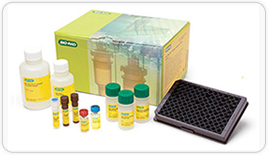
Bio-Rad has developed a multiplex Bio-Plex Pro human cancer biomarker panel that measures angiogenesis biomarker in diverse matrices including serum, plasma, cell culture supernatant and many other sample types. Using this assay, it is possible to quantify multiple angiogenesis targets n a single well of a 96-well microplate in just three hours, using as little as 12.5ul of serum or plasma.

To read more see the attached technical note.

Working Range vs. Dynamic Range in Quantitative Immunoassays

 :: Posted by American Biotechnologist on 06-01-2011

For any quantitative immunoassay, the distinction between the dynamic range of an assay versus working range of an assay is an important consideration. Many believe the working range of an assay and the dynamic range of an assay are one and the same. However, this is not the case. Here we discuss the distinction between these two terms.

For quantitative immunoassays the dynamic range of an assay is described as the lowest to the highest concentration of an analyte that can be reliably detected by the assay. This is sometimes referred to as the lower and upper limits of detection (LLOD and ULOD, respectively). Although signal is detected, the accuracy and precision of this number may vary beyond what is acceptable to report as an accurate measure of the concentration of the target. Although still a useful measure, dynamic range is not as rigorous a measure of the true range of the assay.

For most labs, the working assay range is a more meaningful measure of the upper and lower limits of quantitation (ULOQ/LLOQ) of an assay. The working range of an assay is commonly defined as the range over which analyte concentrations can be quantitated with acceptable precision and reliability. Because this is a stricter measure and requires both sensitivity and accuracy, the working range is typically narrower than the dynamic range. However, it is a more reliable measure of the true range of concentrations that can be accurately quantitated.

As compared to the dynamic range, the values associated with working range of an assay are both precise (defined as how reproducible multiple measurements or calculations are) and accurate (defined as how close a measured or calculated quantity is to its true value).

Bio-Rad Laboratories is a leading provider of instrumention and assays for performing quantitative immunoassays. Bio-Rad’s Bio-Plex instrument is a powerful system for quantitative analysis of up to 100 different proteins, peptides, DNA fragments and RNA fragments from a single drop of sample.

To learn more be sure to view the following Bio-Plex tutorial videos posted right here on the American Biotechnologist.

A powerful system for multiplex analysis

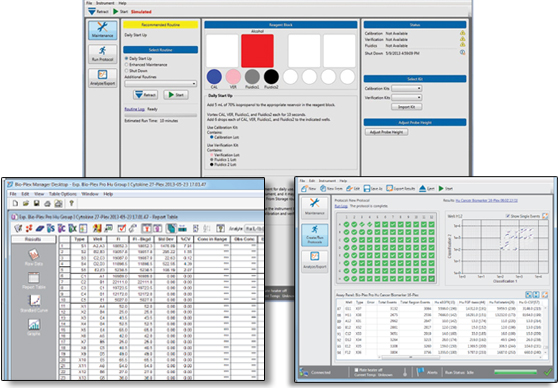
Programming Bio-Plex Manager software

Analyzing Bio-Plex experimental data

Analyzing Bio-Plex experimental data

 :: Posted by American Biotechnologist on 05-05-2011

In this latest video tutorial from Bio-Rad Field Application Specialist Dr. Sean Taylor, you will learn how to analyze your Bio-Plex experimental results using Bio-Plex Manager software.

Programming Bio-Plex Manager software

 :: Posted by American Biotechnologist on 04-26-2011

A step-by-step tutorial on how to program Bio-Rad Laboratories’ Bio-Plex Manager software. Given by Dr. Sean Taylor, Field Applications Specialist, Bio-Rad Laboratories.

A powerful system for multiplex analysis

 :: Posted by American Biotechnologist on 04-20-2011

The Bio-Plex system is a powerful system for quantitative analysis of up to 100 different proteins, peptides, DNA fragments and RNA fragments from a single drop of sample.

In this video given by Dr. Sean Taylor, you will be given a comprehensive introduction to the Bio-Plex system including answers to the following questions:

  • what is Bio-Plex technology
  • why multiplex
  • cost comparison of Bio-Plex to standard ELISA
  • what is suspension bead array technology
  • what can be analyzed with the Bio-Plex system